
Why block paving stays popular
Design options that stay useful
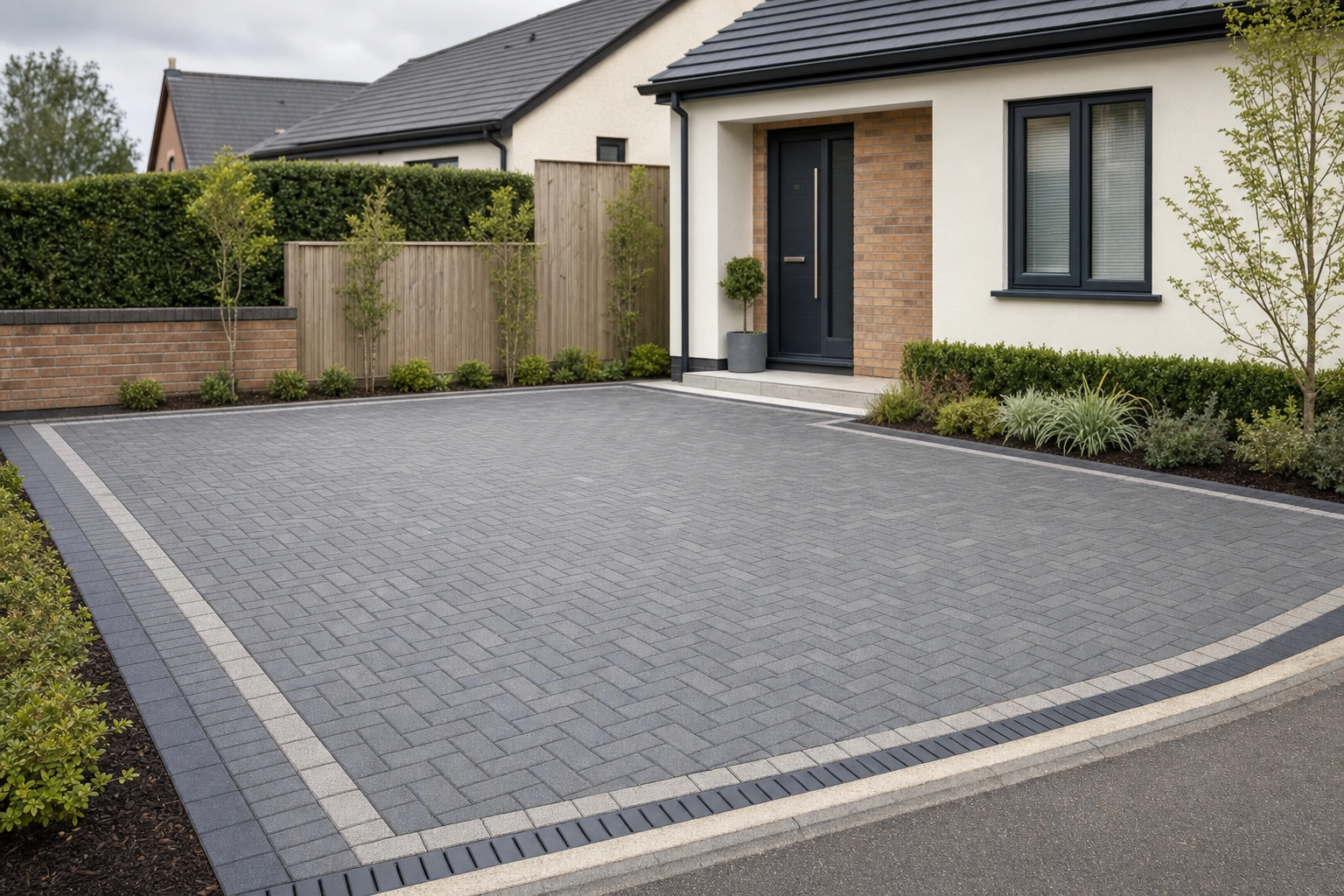
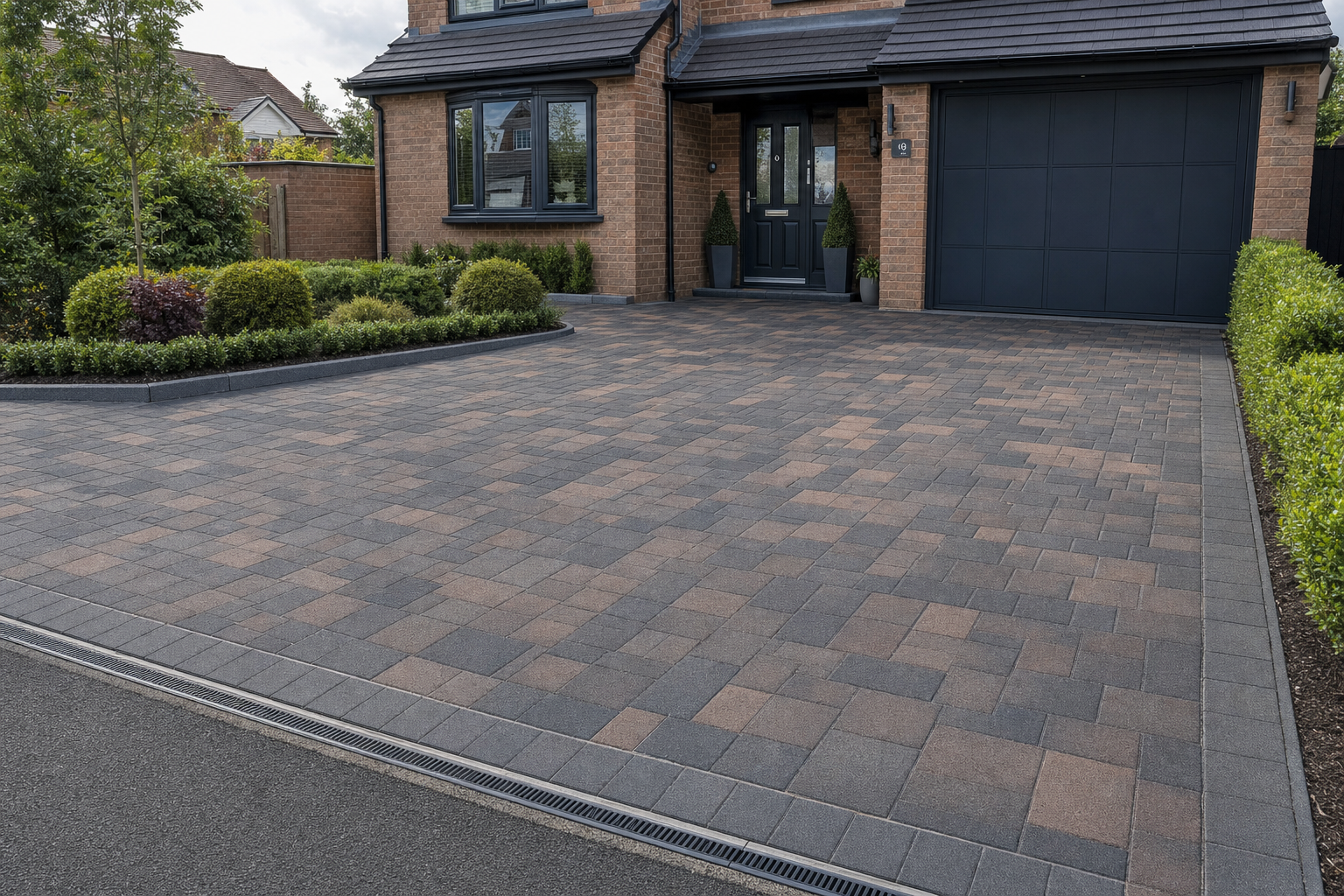
Borders, colours and patterns can mark parking areas without making the front look busy.
Easier localised repairs
Individual blocks can be lifted and replaced if one area later needs access or repair.
Approved paving standard
Marshall Approved Installer status adds confidence when you are investing in a paved drive.
A tidy finish with room for proper detail
Block paving gives you far more control over the finished look than a plain surface. You can shape parking bays, add borders, pick contrasting edges and use laying patterns that suit the property rather than fight it. With J Lowther & Sons Driveways & Building Services, the design side still stays practical. We help you think about vehicle routes, thresholds, drainage and the spots that take the most weight, so the drive looks sharp and behaves itself once it is being used every day.
Built to stay firm under regular vehicle use
The blocks you see are only part of the job. We excavate, form a compacted sub-base, prepare the laying course, place the blocks accurately and finish with jointing sand to help the surface lock together. Edge restraint and gradients matter just as much, because that is what helps prevent movement, spreading and sinking. Routine care is straightforward too, with sweeping, weed control, periodic re-sanding and optional sealing all helping to keep the drive neat.
Frequently asked questions
Can damaged blocks be replaced without redoing the whole drive?
In many cases, yes. One of the practical strengths of block paving is that individual blocks can be lifted and replaced where damage is local. That said, we still inspect the area underneath, because a failed base or poor edge support can be the real reason the problem showed up in the first place.
Does a block paving driveway need sealing?
Sealing can be useful, but it is not always essential. Some customers want it for appearance and easier routine cleaning, while others are happy with regular sweeping, weed control and re-sanding where needed. We can explain the likely upkeep so you can decide whether sealing is worth it for your drive.
What stops block paving from sinking or spreading?
Good preparation does. A driveway needs proper excavation, a well compacted sub-base, accurate levels, sound edge restraint and jointing sand doing its job across the surface. If those parts are weak, the blocks above soon show it. If they are right, the paving has a far better chance of staying firm and even.