
What good landscaping should achieve
Usable routes and zones
We shape movement through the garden so different areas connect without awkward level changes.
Front-to-back coordination
Patios, paths and grass can be finished as one planned layout rather than separate fixes.
Groundwork before cosmetics
Drainage, steps and retaining edges are settled early, before the nice bits go on top.
Landscaping that fixes how the space works
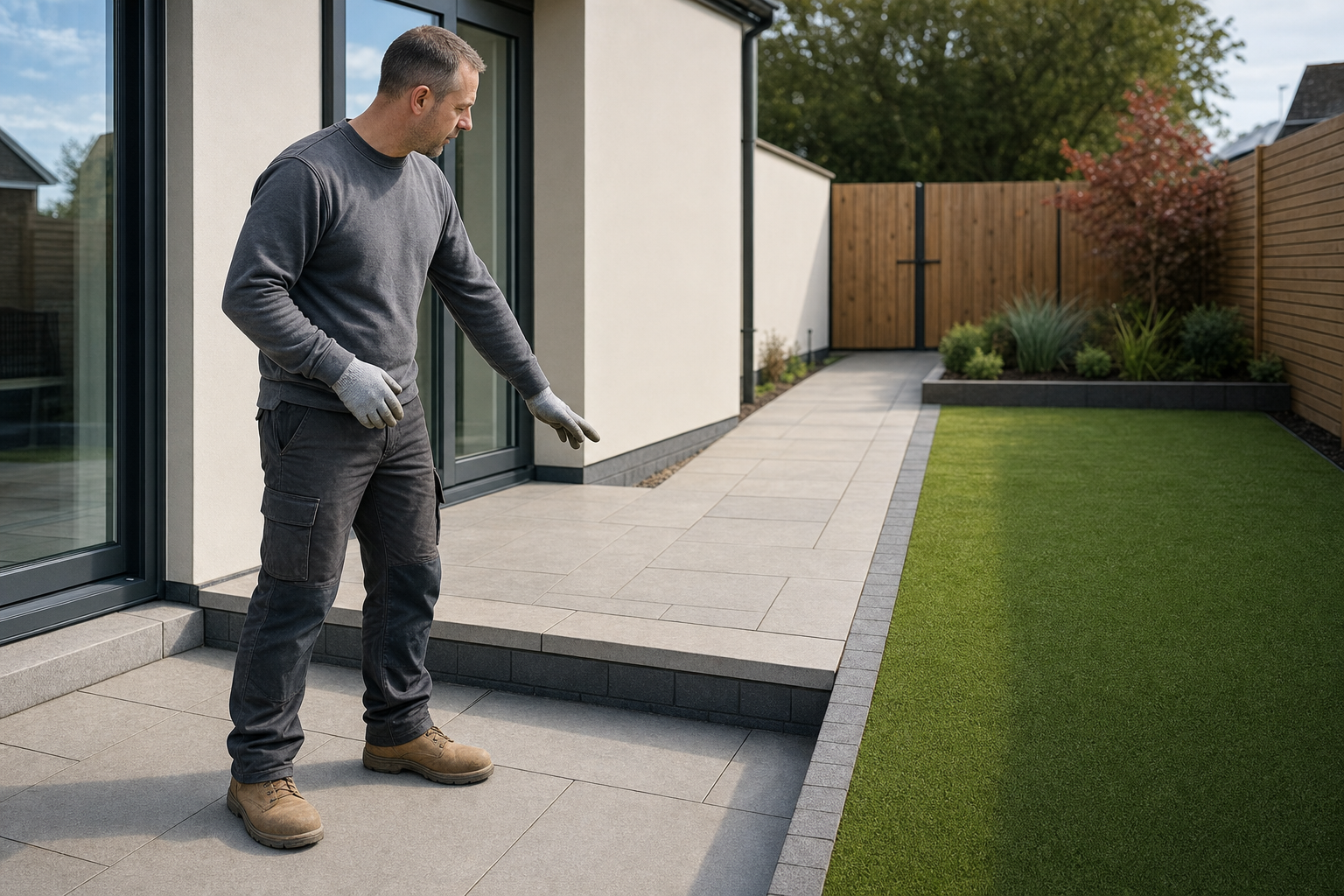
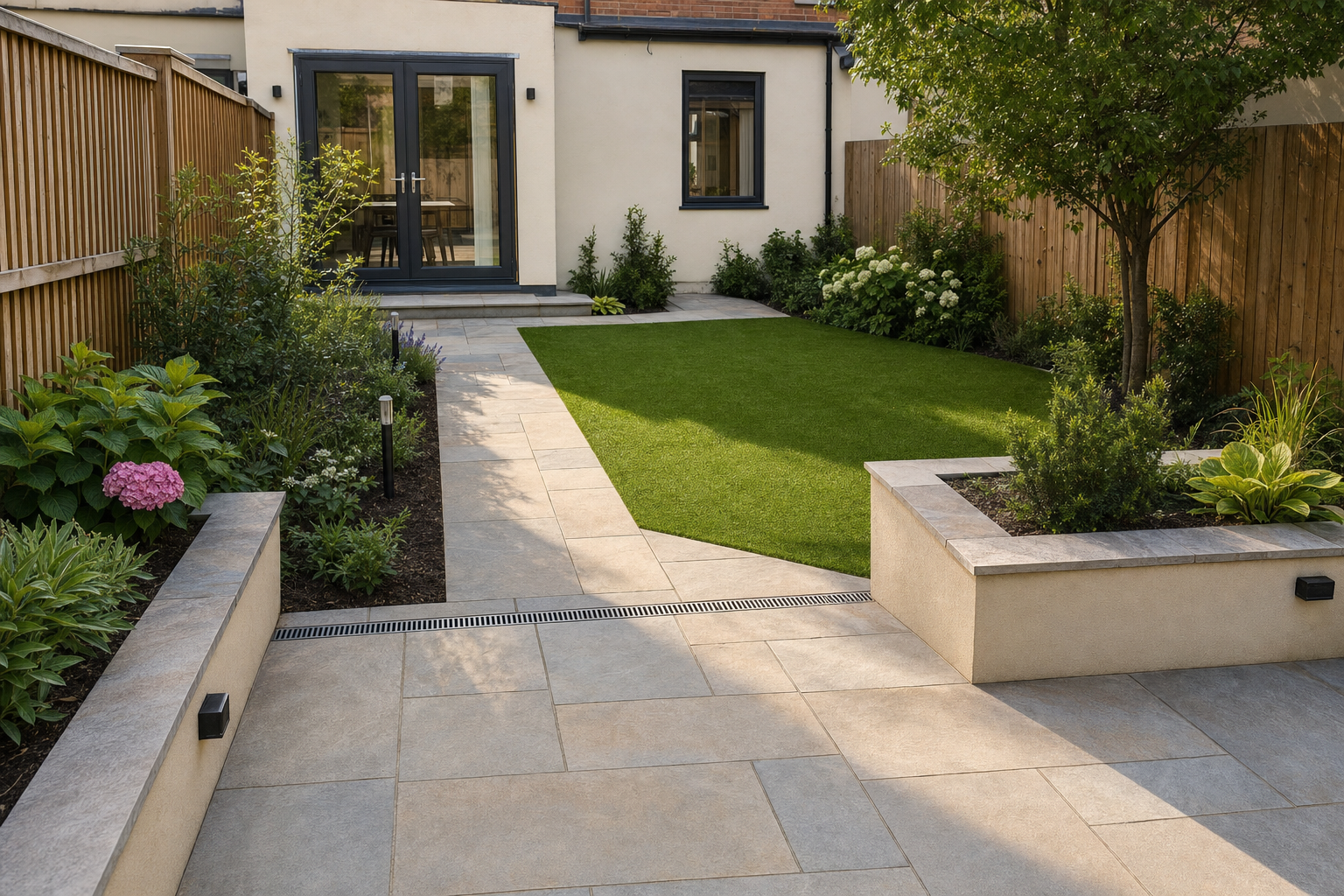
Some gardens do not need grand ideas. They need clear routes, better levels and surfaces that actually make the space usable. That is where construction-led landscaping earns its keep. With J Lowther & Sons Driveways & Building Services, we can tie together patios, paths, flagging, artificial grass and other hard landscaping so the outside of the property works as one place instead of a collection of unrelated patches. That means thinking about access, drainage, steps and edges before any visible finish goes down.
Why planning your whole landscape layout at once matters
Coordinating several elements within one project helps materials, levels and routes make sense together. A patio that sits too high, a path that pinches down for no reason or artificial grass that finishes badly against paving can make a garden feel awkward even when each part looks fine alone. We assess the site, prepare the ground, install the structural parts and then complete the surfaces, so the final result is practical first and good-looking because of it.
Frequently asked questions
Can paving and artificial grass be done in one project?
Yes, and planning them together usually gives a better result. Joint work helps with levels, edging and transitions, so the paving does not feel separate from the rest of the garden. It also means the groundwork can be organised in the right order instead of one new area being disturbed to build the next.
Why is drainage so important in landscaping work?
Because water has a habit of finding every shortcut you forgot to allow for. If levels and falls are not planned early, puddles, washout and soggy edges can spoil even a tidy-looking garden. Thinking about drainage before the surfaces go in helps the finished layout stay practical through the wetter months as well.
What should we think about before changing the garden layout?
Start with how you want to use it. That usually means where you sit, how you move through the space, which areas need low upkeep and where storage or access matters. Once that is clear, it becomes much easier to judge whether patios, paths, flagging or artificial grass will work well together.