
What good garden paving should do
Create clearer movement
Paths and paved spots are shaped around real routes through the garden, not guessed later.
Suit the style of the space
Textures, patterns and edges can be adjusted to fit either formal or relaxed garden layouts.
Work with other features
Paving can be integrated with grassed and landscaped areas so the whole garden feels coherent.
Designing functional paths and patios for everyday use
Garden paving is not only about filling space with slabs. Used properly, it creates useful routes, shapes seating areas, tidies up utility spots and makes it easier to move between doors, gates and outbuildings without wearing tracks through the lawn. With J Lowther & Sons Driveways & Building Services, we start with how the space is used. Route width, accessibility, level changes and the feel of the garden all matter, because a path that looks neat on paper is no good if two people cannot pass each other on it without stepping into the border.
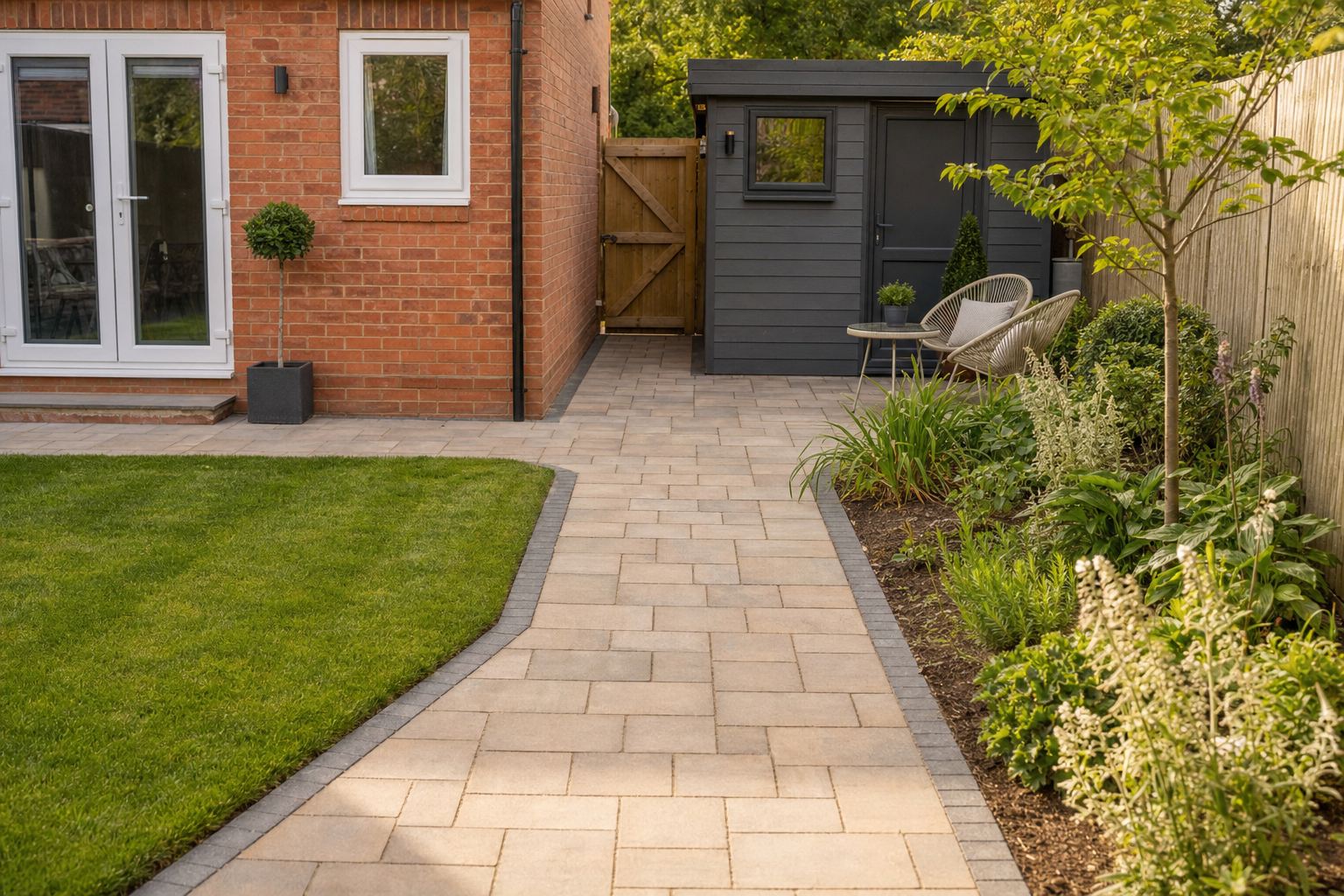
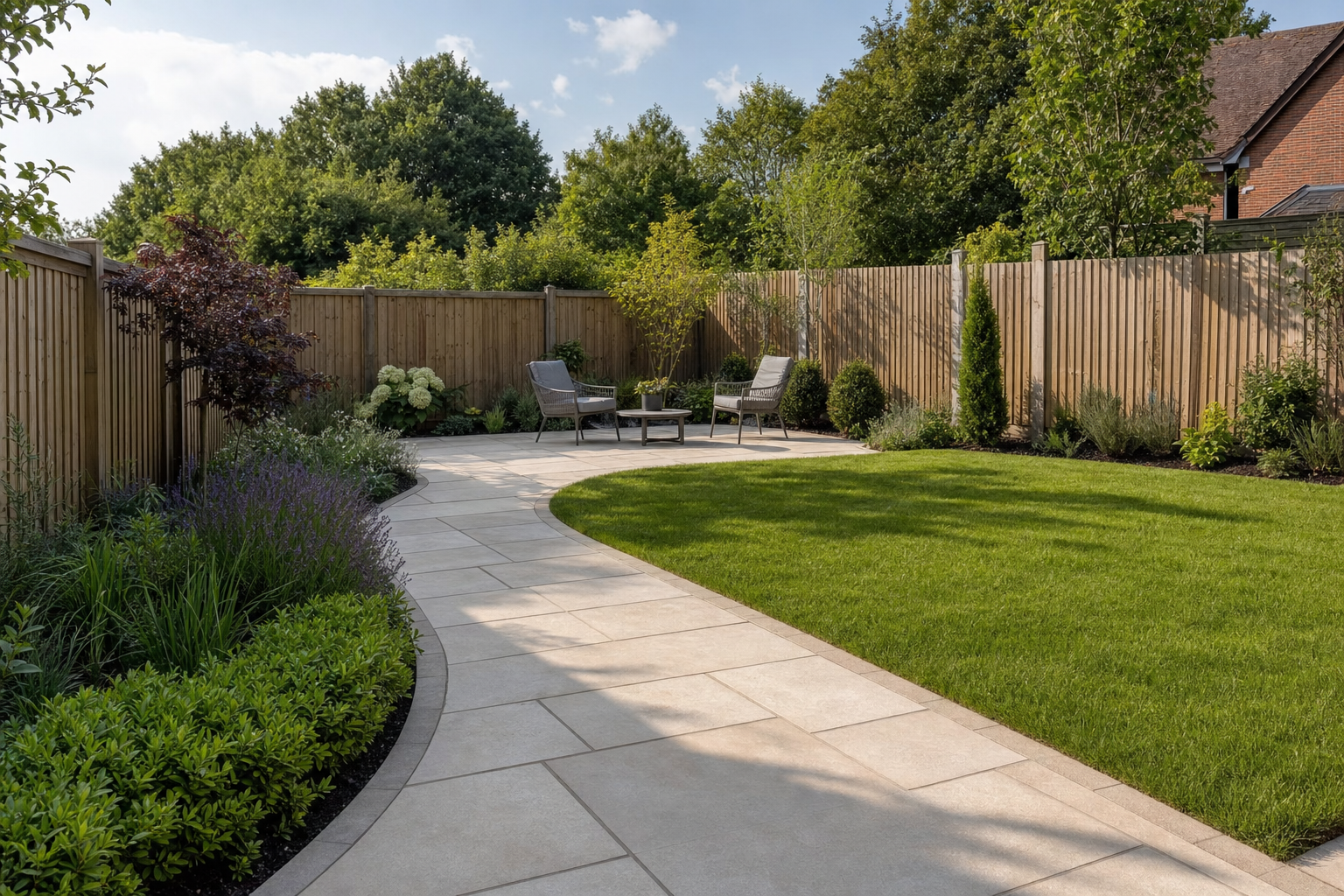
Material, layout and edge detail all count
Slab format, laying pattern, edging and surface texture can shift the whole character of a garden, from something formal and straight-lined to a softer, more informal setting. We prepare the ground properly, set drainage falls, bed the paving securely and form stable joints so the finished surface feels dependable underfoot. Where paving sits alongside artificial grass or other landscaped features, we plan the balance carefully so the garden stays practical and does not feel over-hard or badly broken up.
Frequently asked questions
How wide should a garden path be?
That depends on who uses it and what it links together. A path to a side gate has different needs from one connecting the house to a main seating area. We look at everyday movement, accessibility and level changes so the width feels practical rather than becoming one of those details that annoys you later.
Can garden paving work with artificial grass?
Yes, and it often works best when both are planned together. Good edge detail and sensible layout help the paved areas and the grass sit neatly side by side. That balance can keep the garden easier to use and maintain without making the whole space feel too hard or overly broken up.
What keeps garden paving stable over time?
Proper preparation, secure bedding, sound edge support and correct drainage all play a part. When those basics are missed, movement and low spots usually show up sooner or later. Taking time on the groundwork gives paths and seating areas a much better chance of staying comfortable and dependable to use.