
What makes a patio earn its space
Laid out around the house
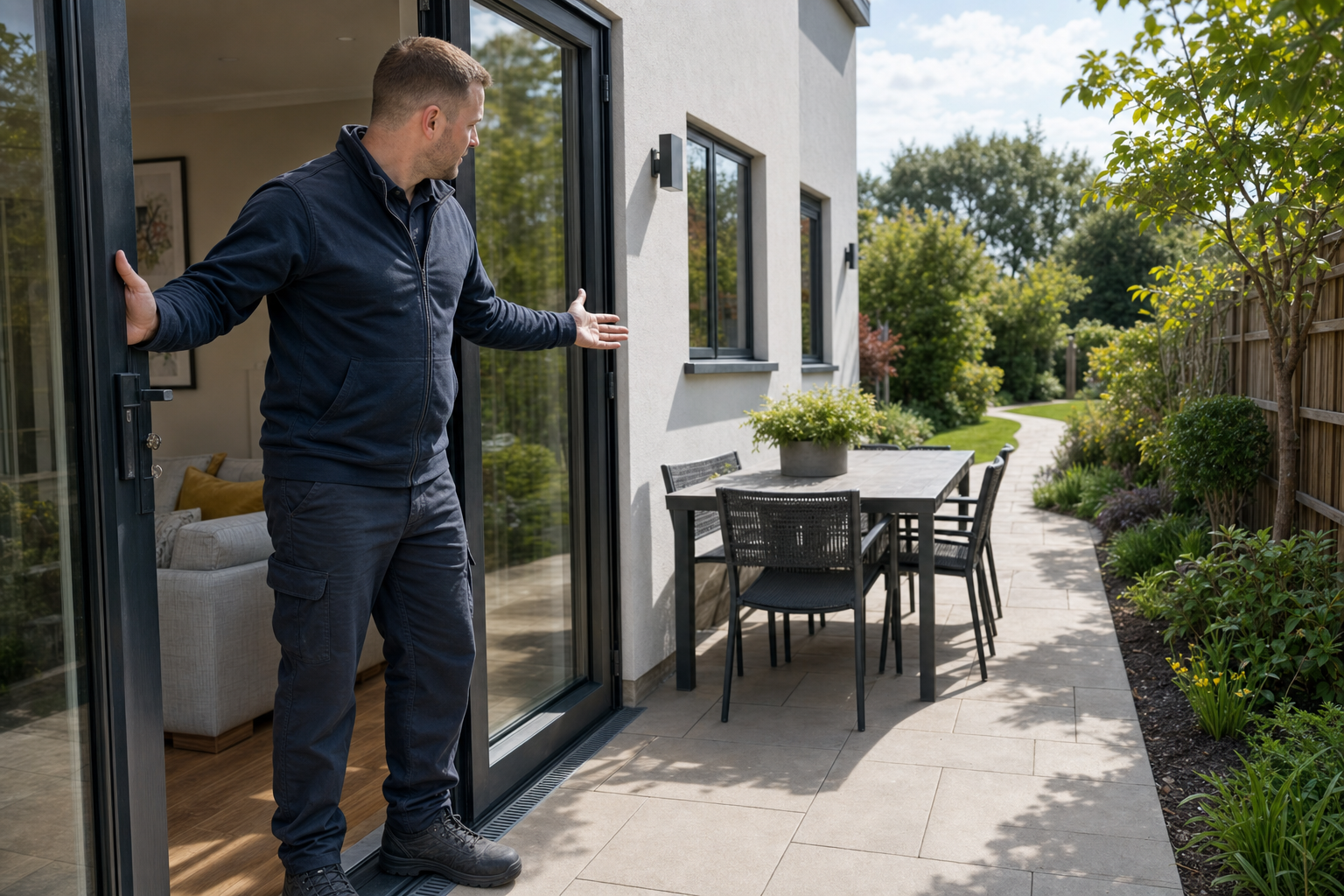
Thresholds, doors and main walking routes shape the patio before the paving choice does.
Room for real furniture use
We plan enough usable space for seating, dining and moving around without tight corners.
Linked with the wider garden
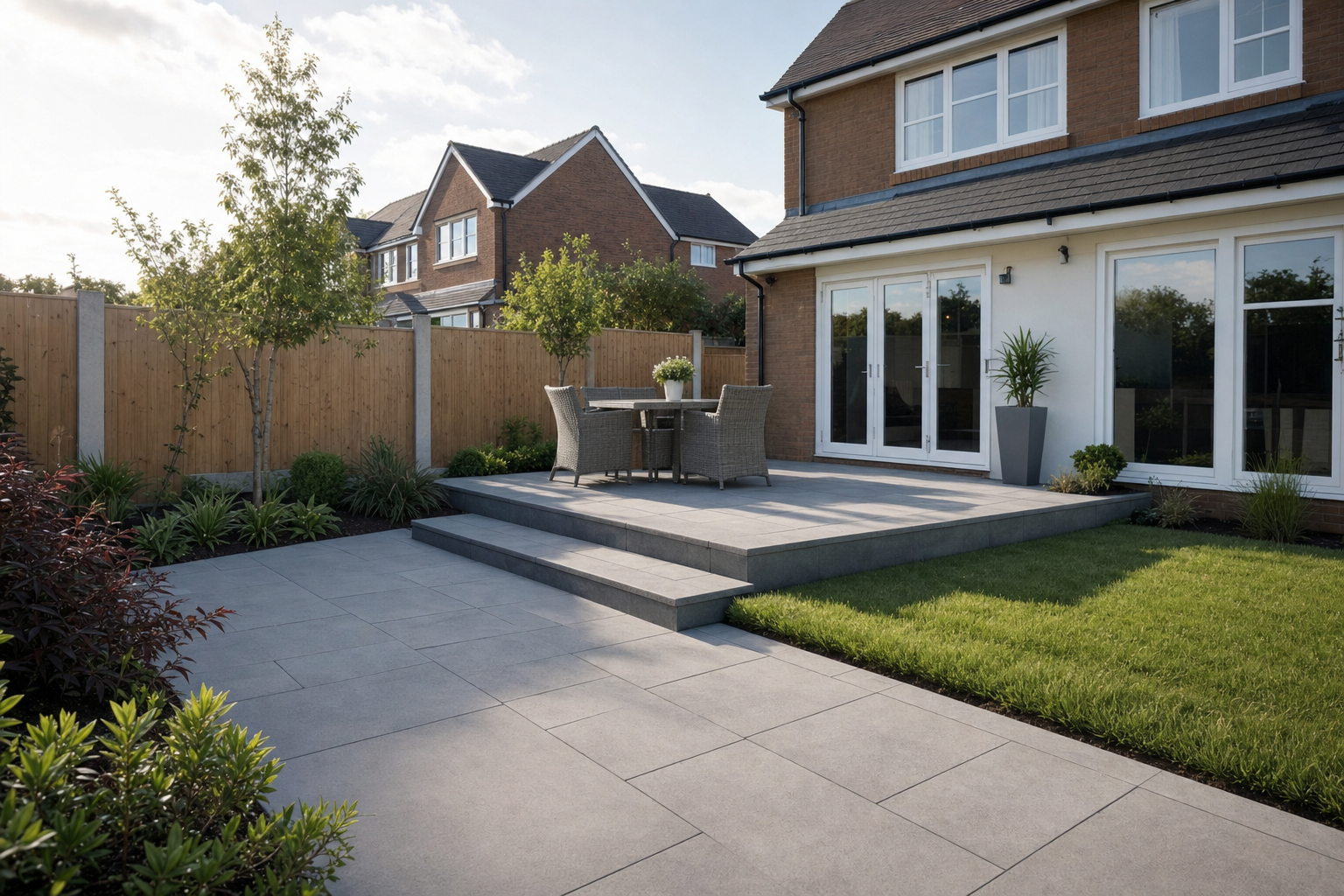
Steps, edges and adjoining paths can be carried through as one practical outdoor layout.
A patio should feel easy to use, not squeezed in
A decent patio gives you somewhere to sit, eat, move through the garden and step out of the house without landing straight on mud or grass. The right layout depends on more than picking slabs. Door thresholds, furniture space, sunlight, garden routes and awkward level changes all need thinking through at the start. With J Lowther & Sons Driveways & Building Services, we help shape a patio that suits how you actually use the space, whether that means a simple sitting area or something tied into paths, steps and other hard landscaping.
Preparation that keeps the finished area stable
A patio only feels solid when the groundwork is right. We look at excavation, sub-base preparation, full bedding, falls for drainage and jointing that suits the chosen material. Natural stone, porcelain and other paving each bring different looks and maintenance needs, so we explain the trade-offs clearly. If the patio joins paths, borders or level changes, those details are planned together, which helps the whole garden flow better and avoids the usual afterthought look.
Frequently asked questions
How big should a new patio be?
That depends on what you want it to do. A small sitting area needs different proportions from a patio used for family dining or regular entertaining. We look at furniture space, access from the house and walking routes through the garden so the size feels useful instead of just looking fine on a plan.
What paving materials can we choose for a patio?
Natural stone, porcelain and other paving options all create a different feel. Some give more variation in colour and texture, while others suit a cleaner, more uniform layout. We explain how each one differs in appearance, grip, upkeep and design flexibility so you can choose with both looks and use in mind.
Why do drainage falls matter on a patio?
Without the right falls, water can sit where you walk, gather by the house or work its way into places it should not. Setting levels properly is a basic part of good patio work, not an optional extra. It helps the surface stay more comfortable to use and supports the long-term performance of the paving and joints.