
Why Tarmac® still makes sense
Built for regular use
Tarmac® suits homes where the driveway sees repeated daily traffic and needs to stay practical.
Border and kerb options
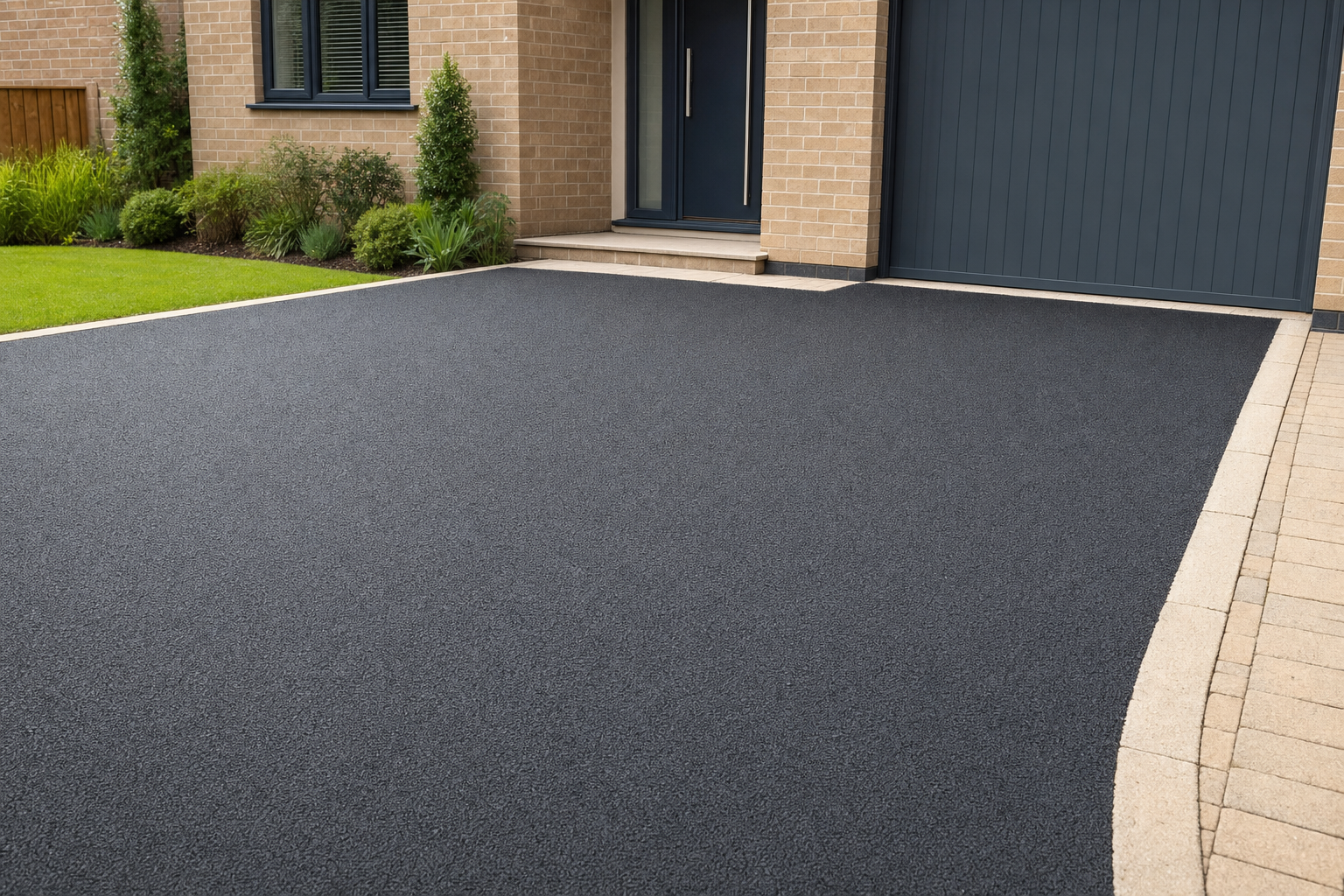
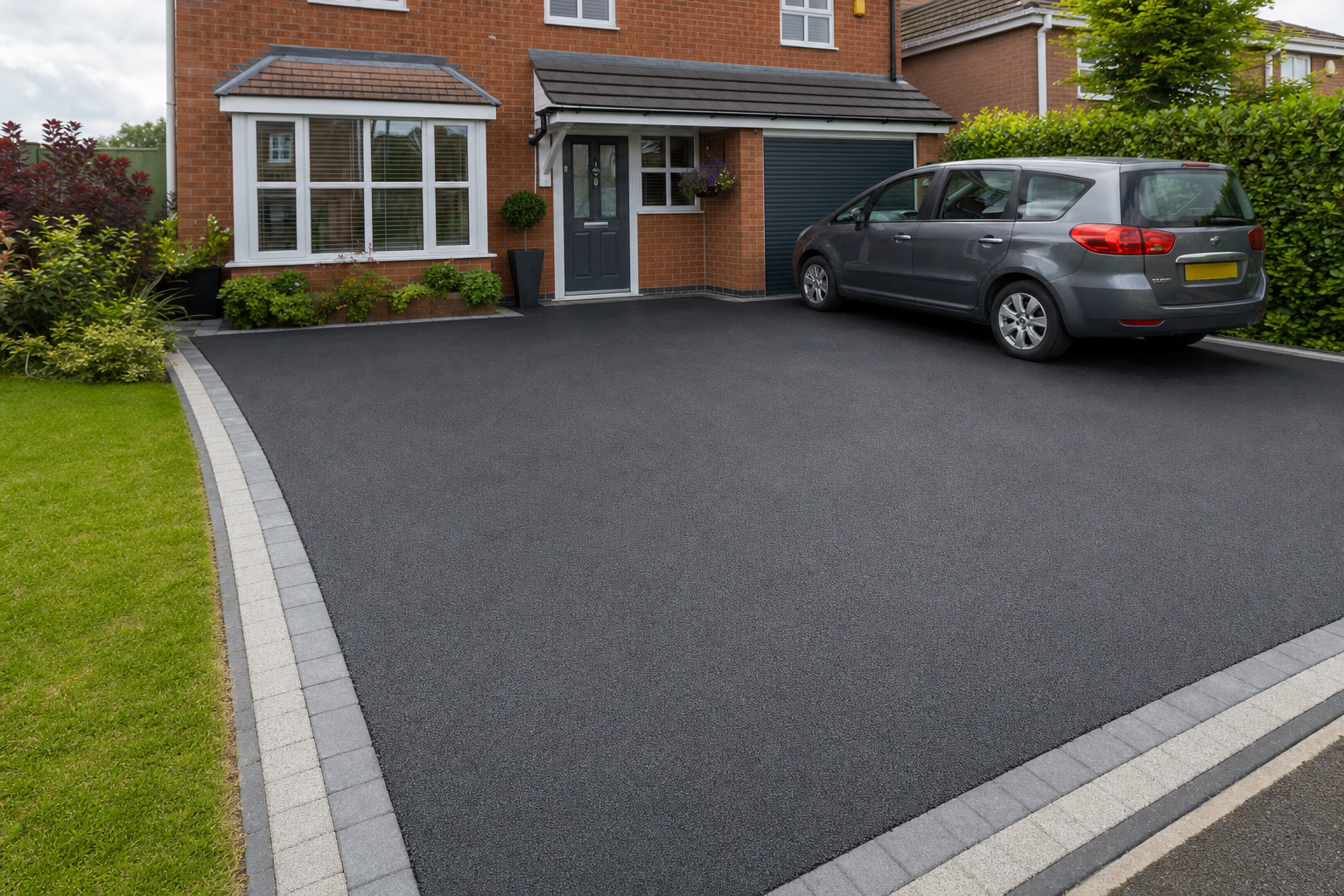
You can keep the main surface simple and still frame it neatly with contrasting edges.
Low-fuss long-term upkeep
Once cured and settled, a Tarmac® drive is generally straightforward to live with and maintain.
A simple surface that works hard every day
Tarmac® is often the sensible choice when you want a clean, practical driveway that can take regular vehicle traffic without a lot of fuss. It suits many properties, keeps the look straightforward and can still be lifted with kerbs or contrasting borders where you want more definition. With J Lowther & Sons Driveways & Building Services, we help you think about how the drive meets the pavement, garage or adjoining paving, because those edge details often decide whether the finished job looks sharp or like it was poured into whatever gap was there.
Firm edges and sound prep make tarmac last
A good tarmac drive depends on excavation, a compacted sub-base and solid edge installation before the Tarmac® itself is applied and compacted. Falls matter too, because standing water and weak edges are two of the quickest ways to spoil a surface that should otherwise provide reliable use. Once laid, the drive needs time to cure properly before heavy use, but after that the maintenance is generally simple, which is one of the reasons homeowners keep coming back to Tarmac®.
Frequently asked questions
Can a Tarmac® driveway still have decorative edges?
Yes. Many customers choose Tarmac® for the main surface and then add kerbs or contrasting borders to sharpen the outline. That can help the driveway sit more neatly against walls, planting or adjoining paving without losing the practical, hard-wearing feel that makes Tarmac® appealing in the first place.
What helps stop Tarmac® edges from crumbling?
Firm edge restraint is a big part of it. If the sides are weak or unsupported, the surface is more vulnerable where tyres turn and where the drive meets softer ground. Proper preparation below and clear edge definition around the drive both help the Tarmac® hold up better under everyday use.
Do we need to stay off a new Tarmac® drive at first?
Yes, for a time. Tarmac® needs to cure properly before it can handle normal vehicle use, and rushing that stage can mark or stress the surface too early. We explain the sensible aftercare at the end of the job so you know when to use the drive and how to help it settle well from the start.